LarkSR3.3
3.3 Environment
Hardware Environment
CPU
Memory
GPU
Sound Card
Software Environment
Operating System
Chrome Browser
VC Runtime Library
DX Runtime
Text Editor
Virtual Sound Card Driver
Virtual Camera Driver
Virtual Handle Controller Driver
System Settings
Turn Off Antivirus and Firewall
Turn Off Application Running Notification
Setup Automatic Login
Set Never Sleep-Never Turn Off the Display
Using Dongle Settings
3D Program Adaptation
Program Adaptation Requirements
Installation and Deployment
System Components
Stand-Alone Version: File Structure Overview
Simple Cluster Version: Package Structure & Deployment Overview
Deployment in Detail
Stand-Alone Intranet Deployment Guide
Stand-Alone External Network Access Guide
Cluster Intranet Deployment Guide (Windows)
Cluster External Network Access Guide (Windows)
Cluster Intranet Deployment Guide (Linux Docker)
Cluster External Network Access Guide (Linux Docker)
Deployment Case Study
Edge Cluster Deployment: Multi-Location Case Study
LarkXR NAT
LarkXR Turn: Built-in TURN Proxy for Rendering Nodes
Nginx Reverse Proxy: Exposing LarkXR Cluster to External Network
Server Port Mapping: Exposing LarkXR Cluster via Port Forwarding
Advanced Cluster Deployment: High Availability and Multi-Master Setup
Dedicated GPU Server
Dedicated GPU Server: Rack Installation and Initial Setup
Operating System Compatibility and Precautions
Running LarkXR
Browser Support
Browser Compatibility Guide
Frontend Usage Instructions
Language Support
Application Overview
Launching an Application
Video Interaction (Client Camera Passthrough)
Voice Interaction (Microphone Passthrough)
Live Streaming
Text Input Methods
Regional Detection and Latency-Based Routing
Resource Allocation Strategy
Virtual Joystick (Remote Pole) Settings
Mobile Touch Gesture Modes
Function Menu
PC Client: Function Menu Guide
Mobile Client: Function Menu Guide
Exiting an Application
Backend Usage Instructions
Logging into the Management Backend
Data Center
Data Center: Resource Monitor
Data Center: Usage Statistics
Data Center: Client Error Log
Applications
Package Management
Package Overview
Add Package
Edit Package
Delete Package
Application Management
Applications
Add Applications
Share
Mouse Mapping
Noun Interpretation
Reserve Applications
Overview
Check Alive Function
Run Applications
Run Applications
Synchronization Management
Synchronization Overview
Client List
SR Client Management
Group Management
Group Management
System Settings
Access Authorization List
Workspace
Parameter Settings
License Type
No Operation Timeout
Storage Configuration
Safety Measurements
Region Setting
Custom Logo
Short Note
Port Mapping
Dispatch Policy
Current Limiting
Theme
Users
Change Password
How to Change Login Password
Port Forwarding
Guidelines on Port Forwarding
Customization
Application Index
Entering Applications
Server Side Settings
Application Storage
Standalone
Local Storage
OSS Storage
AWS S3
Cluster
Local Storage
OSS Storage
AWS S3
General Features
Disk Space
Synchronization
Configure Maximum Synchronization Count
Feature Components
Data Channel
Additional Parameters
Smart Voice
Video Input
Voice Input
External Physical Controller
Interactive Mode
How to Use
Frontend Usage
Interactive Mode Interface Integration
Security Settings
Feature Components
Redis
MySQL8
Database Monitoring (Druid)
Change Username and Password
Disable Statistical View
HTTPS Access
Windows
Linux Docker
Application Authentication
Workplace Access Encryption
SDK ID for Encrypted Secondary Development
Security Settings
Use Application Listing Page
IP Blacklist and Whitelist
Allow Cross-Origin
CORS
CORS For Upload
Frequently Asked Questions (FAQ)
Troubleshooting Common Issues
Update Log
Product Release Notes
-
+
首页
Users
In the backend management system, user management functionality is provided, including operations for adding, editing, and deleting users. User roles are categorized as system administrators, operators, and regular users, each with different levels of permissions. 1. **System Administrators**: - System administrators have the highest level of permissions and can perform all operations, including user management as well as managing and configuring other system functions. 2. **Operators**: - Operators have extensive permissions within their respective workspace. Apart from user management, they can manage applications and other data within that workspace. - Specific permissions include but are not limited to application management, data management, etc., ensuring effective management within the workspace for operators. 3. **Regular Users**: - Regular users have the following permissions: - Resource Monitoring: View monitoring data of system resources such as CPU, memory, disk, etc. - Client Exception Monitoring: Monitor and view client exception information. - Terminal Management: View terminal devices. - Group Management: View groups. - Change Password Functionality: Allow users to change their login passwords to enhance account security. - No Operating System Data Operations: Regular users cannot manipulate operating system data to ensure system security. With the above permission settings, different user roles can perform corresponding operations based on their responsibilities and needs, enabling rational distribution and management of permissions. This optimized design can enhance system security, management efficiency, and ensure legitimate and secure user operations within the system. 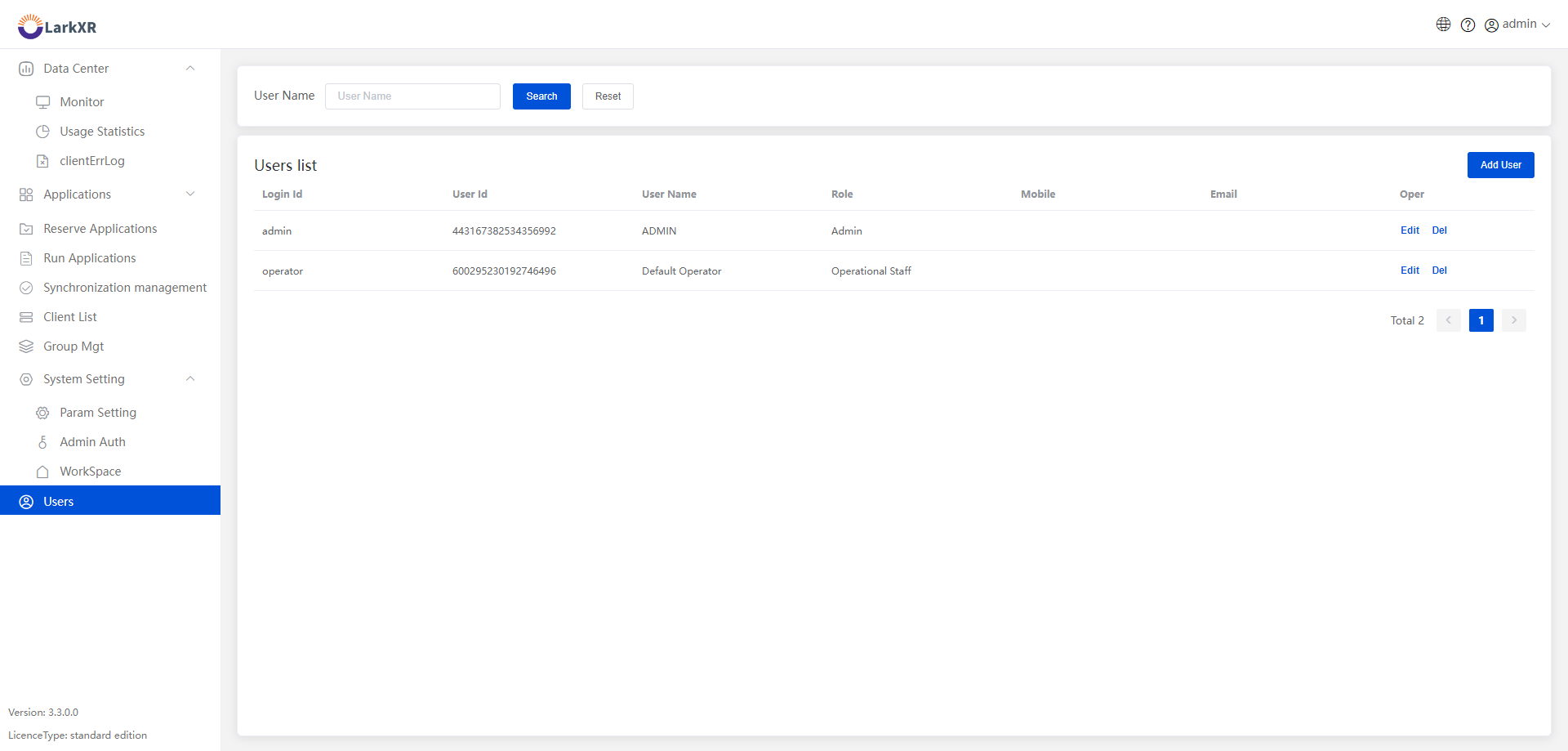
admin
2025年4月3日 17:00
转发文档
收藏文档
上一篇
下一篇
手机扫码
复制链接
手机扫一扫转发分享
复制链接
Markdown文件
Word文件
PDF文档
PDF文档(打印)
分享
链接
类型
密码
更新密码
有效期